Short answer: most mythological symbols are compressed stories. The ankh is a hieroglyph for life, the Eye of Horus is a wound that got repaired, and the Valknut is an honest question mark. Here are 20 signs from Egypt, Greece and Scandinavia, with what scholars can actually document. If you want objects rather than signs, see the 10 most powerful mythical objects.
20 mythological symbols and what they really mean
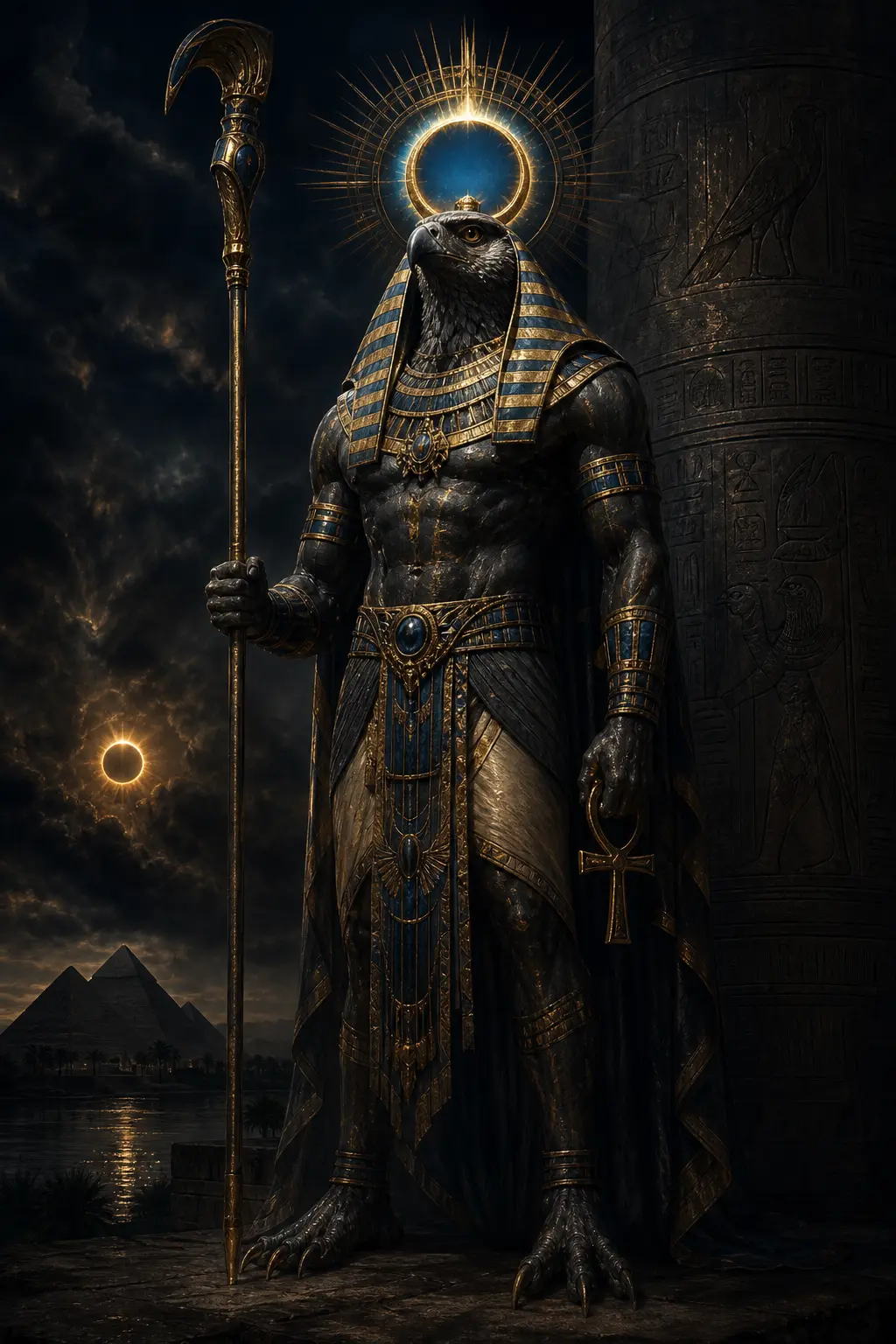
Hear these myths narrated



Egyptian symbols
| Symbol | Meaning | Where it comes from |
|---|---|---|
| Ankh | Life, the breath the gods hand over | A hieroglyph read ankh, "life". Gods hold it to a pharaoh's nose like an oxygen mask |
| Eye of Horus (wedjat) | Healing, protection, wholeness restored | Set tore out Horus' eye and Thoth put it back together. Scribes later used its six parts as fractions, adding up to 63/64 |
| Eye of Ra | Aggressive protection: a daughter goddess sent out as a weapon | A different thing entirely. Ra dispatches his eye as Hathor, Sekhmet or Bastet, and she does not always come back willingly |
| Scarab | Rebirth, the sun renewed at dawn | The beetle rolls a ball of dung across the sand. Egyptians read that as Khepri pushing the sun over the horizon |
| Djed pillar | Stability, endurance, the spine that holds | Understood as the backbone of Osiris. "Raising the djed" was a royal rite |
| Was sceptre | Dominion, the right to rule | A staff with a forked base and an animal head, carried by gods and kings |
| Feather of Maat | Truth and cosmic order | Weighed against the heart of the dead in the judgement hall |
Greek symbols
| Symbol | Meaning | Where it comes from |
|---|---|---|
| Aegis | Terror worn as armour | The goatskin shield of Zeus and Athena, fringed with snakes and bearing a gorgon face |
| Caduceus vs rod of Asclepius | Two snakes and wings mean commerce, heralds and thieves. One snake, no wings, means medicine | The caduceus belongs to Hermes, patron of merchants and thieves. The single snake rod belongs to Asclepius, god of healing. US military medicine mixed them up in the 1900s and the error stuck |
| Owl of Athena | Clear sight, strategic wisdom | Athena's bird, stamped on Athenian coins for centuries |
| Laurel wreath | Victory, poetic and athletic honour | Daphne turned into a laurel escaping Apollo, and he claimed the tree as his |
| Thyrsus | Ecstasy, fertility, controlled loss of control | A fennel staff topped with a pine cone, carried by Dionysus and his maenads |
| Labyrinth | A trial you survive with memory, not choices | Built by Daedalus at Knossos for the Minotaur. Classical labyrinths have one winding path, no dead ends |
| Gorgoneion | Apotropaic defence: a face that throws harm back | The head of Medusa, set on shields, temples, coins and doorways |
Norse symbols
| Symbol | Meaning | Where it comes from |
|---|---|---|
| Mjolnir | Protection, blessing, consecration | The hammer of Thor. Pendants spread in the 10th century, partly as an answer to Christian crosses |
| Valknut | Uncertain. Probably tied to Odin and the slain | Three interlocked triangles on Gotland picture stones and the Oseberg burial. No Norse text names or explains it, and even the name is a modern coinage |
| Yggdrasil | The structure of the cosmos | The ash tree that holds the nine worlds. Odin hangs on it nine nights to win the runes |
| Huginn and Muninn | Thought and memory | Odin's ravens, out at dawn and home by evening. In the Grimnismal Odin admits he fears more for Muninn |
| Gungnir | Authority and the binding oath | Odin's spear, forged by dwarves. It never misses, and oaths sworn on it cannot be broken |
| Vegvisir | "Wayfinder", protection against getting lost | Documented in Icelandic grimoires of the 1800s, roughly 800 years after the Viking Age |
Quick questions
What is the most powerful protection symbol in mythology?
By documented use, the Gorgoneion and the Eye of Horus. Both are apotropaic: carved on doors, shields, ships and amulets to send harm back where it came from, and both stayed in service for more than a thousand years. Mjolnir pendants do the same job in the north, across the nine realms.
What is the difference between the Eye of Horus and the Eye of Ra?
Different eyes, opposite jobs. The Eye of Horus is passive and restorative: lost in the fight with Set, healed by Thoth, so it stands for repair and protection. The Eye of Ra is an agent, a goddess whom Ra sends out to punish and who has to be calmed with beer and dancing before she returns. One heals you, the other is aimed at you. More context in our list of Egyptian gods.
Is the Vegvisir a real Viking symbol?
No, and saying so costs nothing. The Vegvisir appears in the Huld manuscript, compiled in Iceland in 1860, alongside other magical staves from post medieval grimoires. There is no Viking age carving of it and no saga mentions it. It is genuine Icelandic folk magic, just about 800 years too late for a longship. The same applies to the "Helm of Awe" as it is drawn today.
If one of these caught you, the story behind it is almost always better than the icon. MythologyNow narrates them as audio drama: the trial of Horus and Set, the raising of the djed, Anubis weighing a heart against the feather. And if you are choosing a symbol to keep for life, start with the tattoo guide.
Keep reading
Hear these myths narrated
MythologyNow is out. Over 100 myths in audio, in six languages.