Short answer: most mythology tattoos carry two meanings at once: the one the design picked up over the last century, and the one it had for the people who invented it. A Medusa tattoo reads today as a survivor symbol; in antiquity her face was a charm carved on shields to frighten evil away. Neither reading is wrong, and knowing both makes the tattoo better. Here are the most inked designs side by side, plus three things worth checking before you book. (More on the creatures themselves in the Greek monsters ranked.)
Mythology tattoos and what they actually mean (before you get inked)
Hear these myths narrated



The designs, then and now
| Design | What people mean by it | What it meant originally |
|---|---|---|
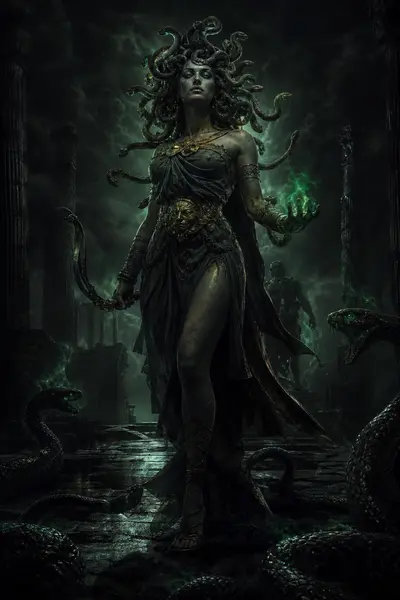
| Medusa | Surviving assault, refusing the shame, turning the gaze back | An apotropaic face on shields, roof tiles and doorways, there to scare off harm |
| Athena and the owl | Wisdom, strategy, keeping a cool head | Much the same, though she is also the goddess who punished Medusa |
| The heel of Achilles | My one weak spot | Mortality itself: everyone has a place the world eventually finds |
| Icarus and the wings | Ambition, flying too close to the sun, beautiful failure | A warning about both extremes. Daedalus said not too high, and not too low either |
| Prometheus | Sacrifice, defiance, giving at your own cost | Fire handed to humanity, with an eternal punishment as the invoice |
| Sisyphus and the boulder | Camus: one must imagine Sisyphus happy | A punishment, plainly. The happiness is a modern layer added in 1942 (the myth) |
| Hermes and the caduceus | Medicine and healing, very often | The herald's staff of the god of merchants, travellers and thieves. See below |
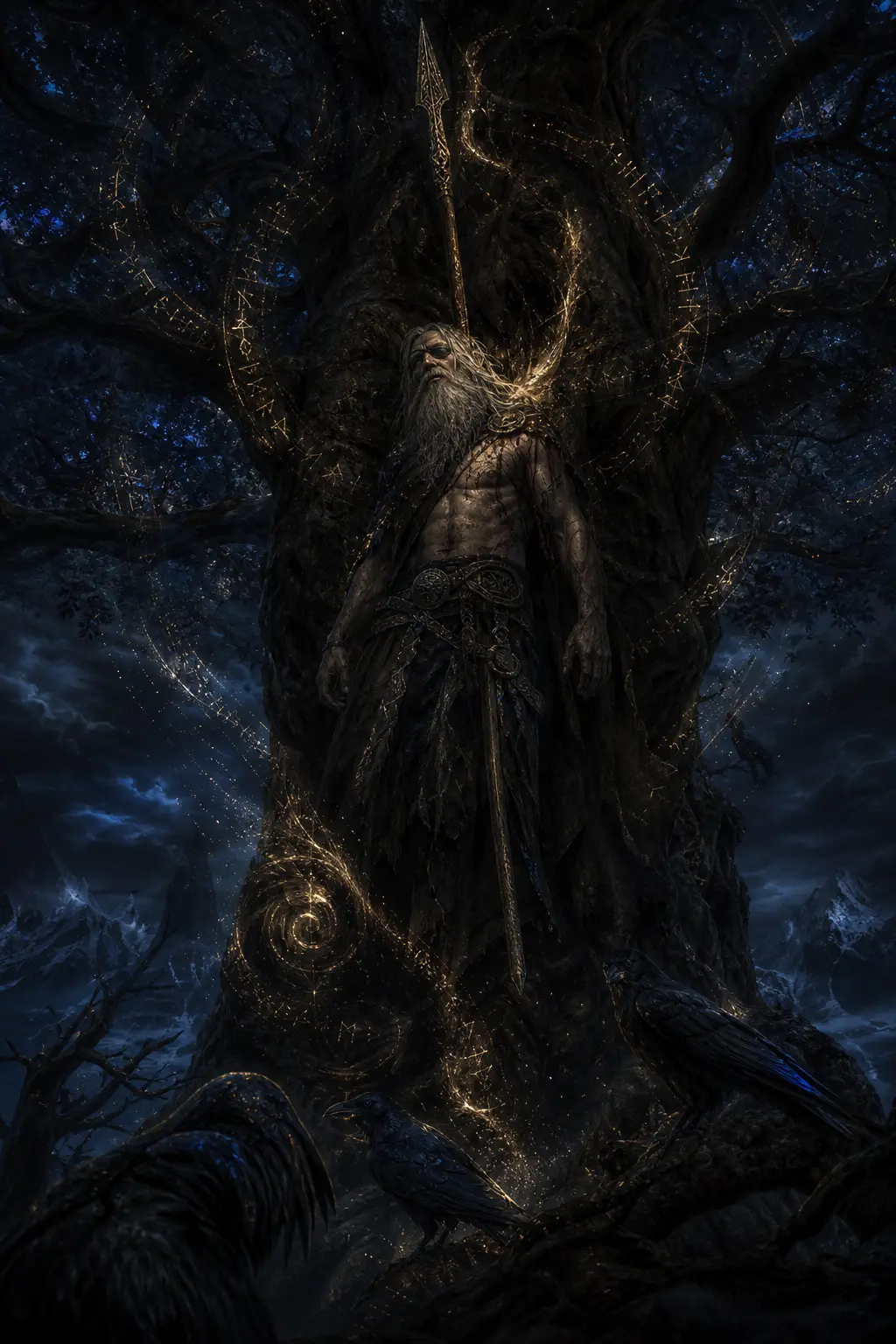
| The Valknut | Courage, dedication to Odin | Three linked triangles on Norse memorial stones, tied to Odin and the slain |
| Mjolnir | Strength, protection, Norse identity | Thor's hammer, worn as a real amulet and used to bless weddings and funerals |
| Yggdrasil | Connection, roots, family | The world tree holding the nine realms together, and the axis of Ragnarok |
| Vegvisir | Never lose your way | An Icelandic magical stave from a 19th century manuscript. Not Viking age |
| Runes | Norse identity, a word spelled out | An alphabet first, magic second. Single runes rarely mean one clean word |
| Ankh | Life, eternal life | The hieroglyph for life, held to the nose of the dead to give back their breath |
| Eye of Horus | Protection, watchfulness | The eye Set tore out and Thoth restored: healing, and being made whole |
| Scarab | Rebirth, transformation | The beetle rolling the sun across the sky, placed over the heart of the mummified dead |
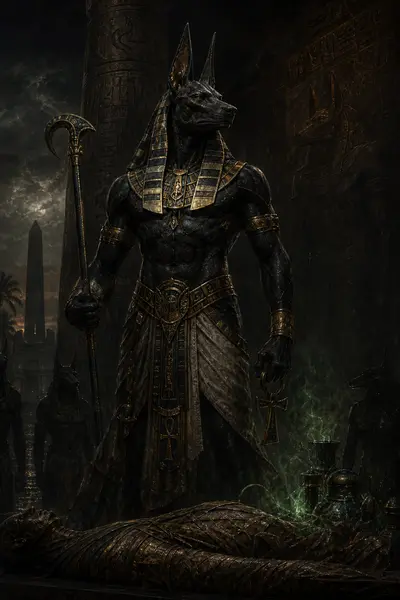
| Anubis | Death, the afterlife, guardianship | The embalmer who weighs your heart and walks you through the door |
| Ouroboros | Eternity, cycles | The serpent eating its tail: time renewing itself, painted in royal tombs |
Before you book
The caduceus is not the medical symbol. Two snakes and a pair of wings belong to Hermes, god of commerce and thieves. The healing staff is the rod of Asclepius: one snake, no wings. The confusion spread from a US Army decision in 1902, and it is now one of the most common corrections tattoo artists have to make.
Vegvisir is not Viking age. It appears in the Huld manuscript, written in Iceland in 1860, roughly eight centuries after the Vikings. It is genuine Icelandic folk magic, just not ancient.
Check a Norse symbol before you wear it. A few designs, including certain runes and sun wheels, were adopted by hate groups in the 20th century and are still read that way in some places. One quick search of your exact design saves an awkward conversation later.
Quick questions
What does a Medusa tattoo mean?
Today, most often: I survived something and I am done carrying the shame. That reading comes from the version where Medusa is assaulted in Athena's temple and punished for it, which turns the monster into a victim. The ancient meaning is different but not opposed: her face was protective, placed at entrances to keep harm out. You can honestly mean either, or both. The story is in Perseus and the Gorgon.
What is the best mythology tattoo for protection?
Three have a real protective history: the Eye of Horus (healing and wholeness, the eye restored after it was torn out), Medusa's face in its original apotropaic sense, and Mjolnir, which Norse people wore as an actual amulet. The Egyptians took this seriously, as the secret name of Ra shows.
Which mythology symbol should I avoid?
Nothing is off limits, but two deserve a second look. Any Norse symbol co-opted by hate groups: check the exact design, since country and context change how it is read. And the caduceus, if you want it to say medicine, because it says commerce.
Whatever ends up on your arm, it is worth knowing the story first. MythologyNow tells them in 5-minute narrated episodes, with voices and music. Start with Perseus and the Gorgon, the myth behind the most tattooed face in the world, whose chapter 1 plays in full on this site, or go Egyptian with Anubis.
Keep reading
Hear these myths narrated
MythologyNow is out. Over 100 myths in audio, in six languages.