Short answer: the main Egyptian gods are Ra (the sun), Osiris (the afterlife), Isis (magic), Horus (kingship), Seth (chaos), Anubis (embalming), Thoth (writing), Hathor (love and music), Sekhmet (war and plague), Bastet (the home), Maat (truth) and Nut (the sky). Two stories tie them together. A family drama: Osiris is murdered by his brother Seth, pieced back together by his wife Isis, and avenged by his son Horus. And a daily miracle: Ra sails the sun across the sky and fights the serpent of chaos every single night. Learn those two stories and the whole pantheon falls into place.
Egyptian gods: the list of the 12 essential deities and what each one rules
·
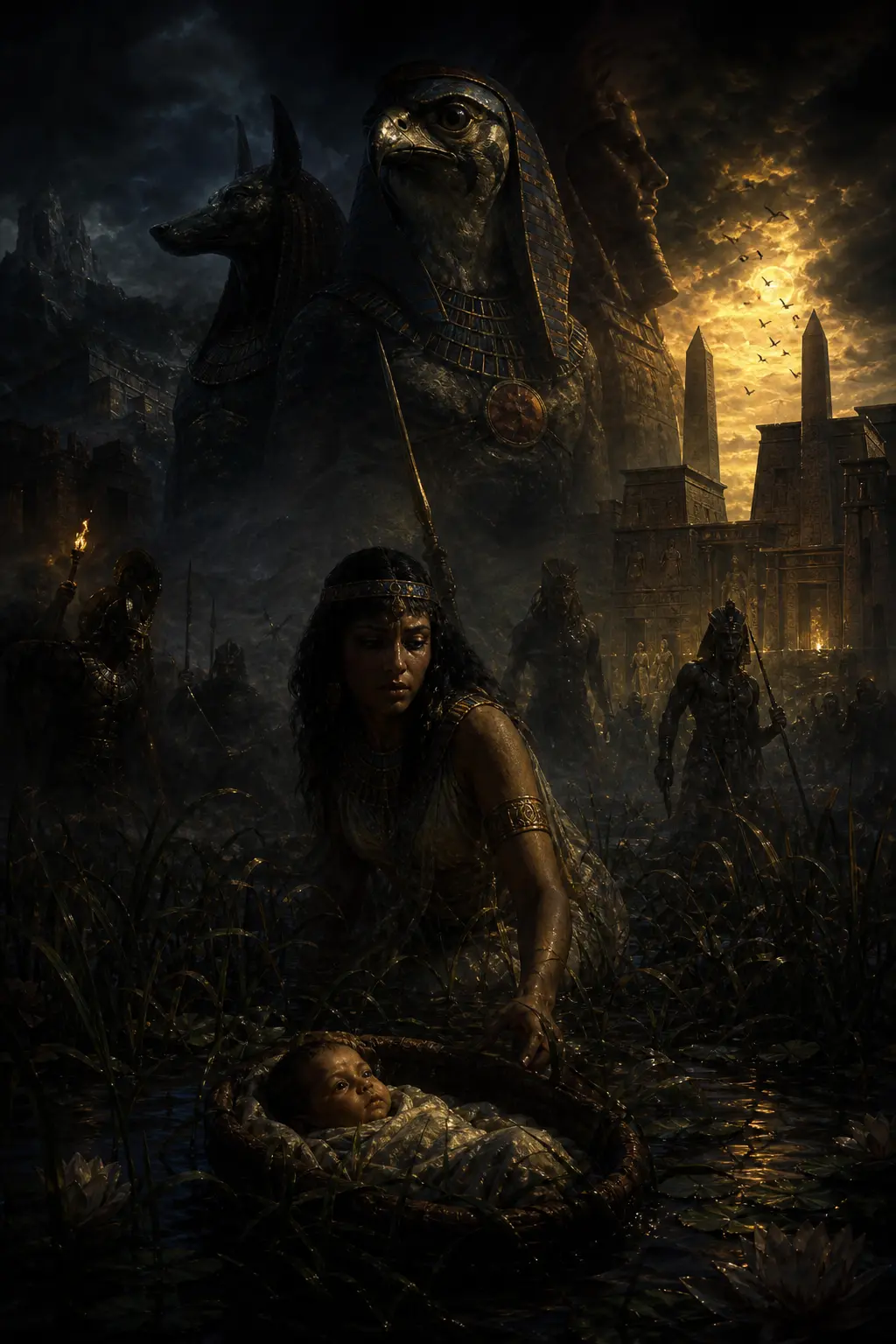
Hear these myths narrated



The essential twelve
| God | Head | Domain |
|---|---|---|
| Ra | Falcon with sun disk | The sun, creation |
| Osiris | Green-skinned man | Afterlife, resurrection |
| Isis | Woman with throne crown | Magic, motherhood |
| Horus | Falcon | Kingship, the sky |
| Seth | The mysterious "Seth animal" | Chaos, storms, the desert |
| Anubis | Jackal | Mummification, guiding the dead |
| Thoth | Ibis | Writing, wisdom, the moon |
| Hathor | Cow horns and sun disk | Love, music, joy |
| Sekhmet | Lioness | War, plague, and healing |
| Bastet | Cat | Home, protection |
| Maat | Woman with ostrich feather | Truth, cosmic order |
| Nut | Star-covered woman | The sky itself, arched over the world |
The twelve cover most of it, but the Egyptian pantheon runs to hundreds. If the god you came for is not above, it is usually Min, fertility and the harvest; Wepwawet, the opener of the ways who marched ahead of the army; Khonsu, the moon crossing the night; Nekhbet, the vulture goddess of Upper Egypt; or Nemty, the falcon who ferried the gods from one bank to the other.
The two stories that organize everything
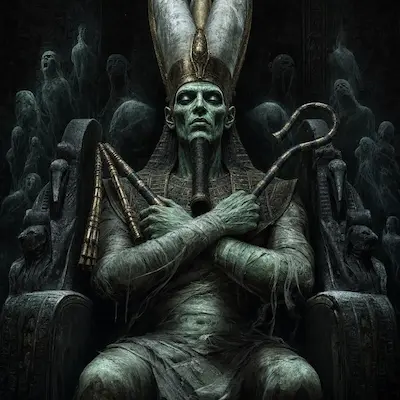
The Osiris myth explains death: murdered and scattered, rebuilt by Isis, Osiris becomes king of the afterlife, where hearts are weighed against Maat's feather. Every mummy, every pyramid, every judgment scene points back to this one story.
The voyage of Ra explains each day: the sun god crosses the sky by boat, ages from morning to evening, and spends every night battling the chaos serpent Apophis to rise again. Egyptian time is not a line; it is a loop that must be defended nightly.
Quick questions
Why do Egyptian gods have animal heads?
The animal is a visual label for the god's nature, not a literal portrait: the jackal haunted cemeteries, so the god of embalming wears its head; the ibis's beak curves like a scribe's pen, so Thoth writes. Egyptians read these images the way we read icons.
Who is the most powerful Egyptian god?
Depends on the era. Ra rules as creator early on; later Amun merges with him as Amun-Ra, king of the gods; and in the afterlife nobody outranks Osiris. The safe exam answer: Ra, with the note that Egypt loved merging its gods.
Is Anubis the god of death?
Of the dead, not of death. Anubis embalms, protects tombs and guides souls to the scales. The kingdom itself belongs to Osiris. Getting that distinction right is an easy extra point.
Every god here has an illustrated profile in our encyclopedia, and the Egyptian saga, from the secret name of Ra to the weighing of the heart, is told in 5-minute narrated episodes in MythologyNow, the app to learn mythology. Chapter 1 of the Osiris myth plays in full on this site.
Keep reading
Hear these myths narrated
MythologyNow is out. Over 100 myths in audio, in six languages.