Short answer: No: Percy Jackson himself is not in Greek mythology. Rick Riordan invented him and named him after Perseus, the hero who beheaded Medusa. The world around him, though, is far more faithful to Greek myth than its Manhattan setting suggests. The divine parents, the powers, the monsters and almost the whole underworld come straight from the sources: Poseidon really did father heroes and monsters, and the sky, sea and underworld really were divided three ways between Zeus, Poseidon and Hades. What the books invent is the frame around all of it. Here is the line by line.
Percy Jackson vs the real myths: what's true and what's invented
·
Hear these myths narrated



What is real and what is not
| In Percy Jackson | In the myths | Verdict |
|---|---|---|
| Demigods everywhere, half god and half mortal | Heracles, Perseus, Theseus and Achilles are all children of a god and a mortal. Yes, the gods really were that irresponsible | Faithful |
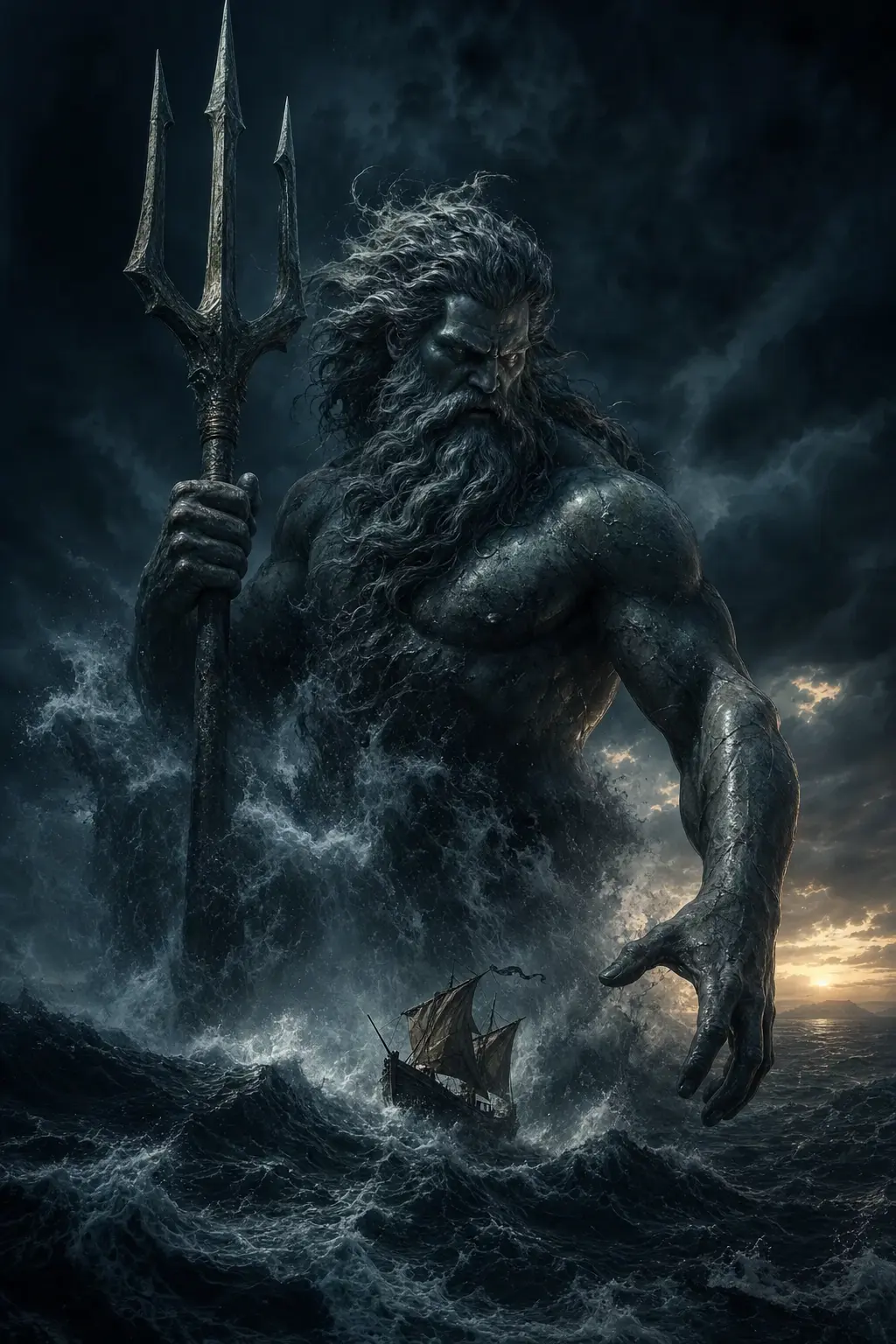
| Poseidon has mortal children | He fathered Theseus the hero, Polyphemus the cyclops and, in some versions, Charybdis herself | Faithful |
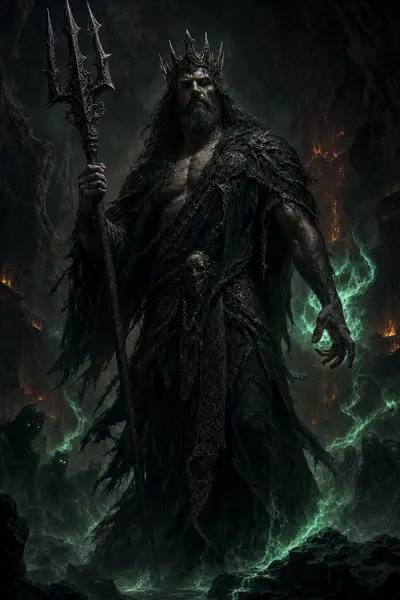
| The Big Three split sky, sea and underworld | After the war against the Titans, Zeus, Poseidon and Hades drew lots for the three realms. Hades lost | Faithful |
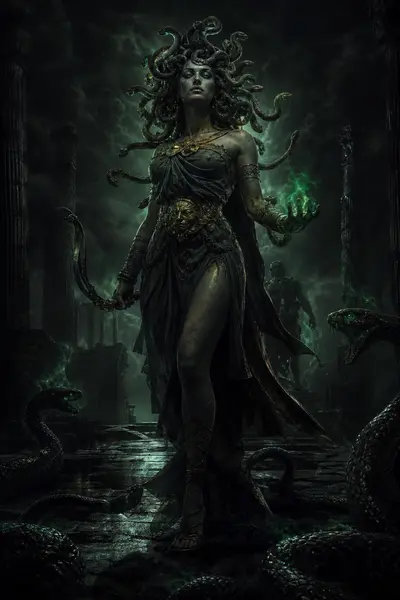
| Medusa turns people to stone and is beaten with a reflection | Exactly how Perseus did it: a polished shield, so he never had to meet her eyes | Faithful |
| The lotus place, Circe's island, a cyclops, the sirens, Charybdis | Every one is an episode of the Odyssey, only with Odysseus walking into it. See the women of the Odyssey | Faithful, relocated |
| Ares is the Olympian nobody likes | The sources agree. Even his own father treats him as the least welcome god on the mountain | Faithful |
| Hermes delivers messages and covers for thieves | Messenger, guide of travelers and patron of thieves. He stole Apollo's cattle while still a newborn | Faithful |
| Cerberus, the Fields of Asphodel, Elysium, the Styx | Real geography of the Greek underworld. Compare it with other underworlds | Faithful |
| Prophecies that come true in the worst possible way | The engine of Greek myth. Ask Oedipus, or ask Cronus, who ate his own children trying to dodge one | Faithful |
| Quests with a deadline and a small team | Heroes did receive impossible assignments, like the labours of Heracles, but they were mostly solitary and imposed by a king or a god | Loosely based |
| Poseidon as a proud, protective father | The Poseidon of the sources has no loyal dad arc. Divine parents appear rarely, and usually for reasons of their own | Loosely based |
| Camp Half-Blood | No training camp exists in any source. Chiron the centaur really did tutor heroes, one at a time | Invented |
| Olympus above Manhattan, the gods moving with Western civilization | A clever modern device, and entirely Riordan's. In the sources the gods stay on Mount Olympus | Invented |
| Percy, Annabeth, Grover and most named demigods | New characters. Only their divine parents and the monsters they meet come from the myths | Invented |
The pattern is consistent: the mythology is treated with respect, and the packaging around it is new. That is why the books work as a door. Walk through it.
What to read after
Start with the cast: the twelve Olympian gods, and then the Greek gods family tree, which explains why everyone in this world is somebody's cousin. For the creature side, the Greek monsters ranked puts Medusa, Charybdis and the cyclops in order of how dangerous they actually were.
Quick questions
Are the Greek gods really that petty in the myths?
Yes, and worse. They turn rivals into animals, punish mortals for winning contests they entered themselves, and hold grudges across generations. Prometheus was chained to a rock for giving humans fire. Percy Jackson softens them, if anything.
Did Medusa really get killed by a demigod?
She did. Perseus, son of Zeus and a mortal princess, with a full kit of divine gear: winged sandals, a cap of invisibility, an unbreakable blade and the mirrored shield that made the whole thing survivable. The full story is in Perseus and the Gorgon.
What should I read or listen to next?
Take the other son of Poseidon, Theseus of Athens, and if you want a route through the whole pantheon, our Greek mythology study guide lays one out.
In MythologyNow these stories are narrated as audio drama, with voices, music and sound. If the books made you curious about the originals, this is the shortest way to hear them.
Keep reading
Hear these myths narrated
MythologyNow is out. Over 100 myths in audio, in six languages.