Short answer: it depends on what you think death is for. Hades is a warden: a fair, rule-bound administrator whose one obsession is that nobody skips the queue. Anubis is not even the boss: he is quality control, the examiner who decides your eternity at the scales. And Hel is an exile queen, thrown into the cold and handed the unglamorous dead as a kingdom. Three underworlds, three completely different job descriptions.
Hades vs Anubis vs Hel: which mythology has the best afterlife boss?
Hear these myths narrated



The underworld org chart
| Ruler | Realm | Who ends up there | Personality |
|---|---|---|---|
| Hades | The Greek underworld | Everyone: heroes, kings, nobodies | Stern, fair, allergic to exceptions |
| Anubis | The Hall of Judgement, inside the Duat | Every soul, for one final exam | Meticulous, incorruptible, hands-on |
| Hel | Helheim, deep in icy Niflheim | Those who die of sickness or old age | Half living woman, half corpse; cold, patient |
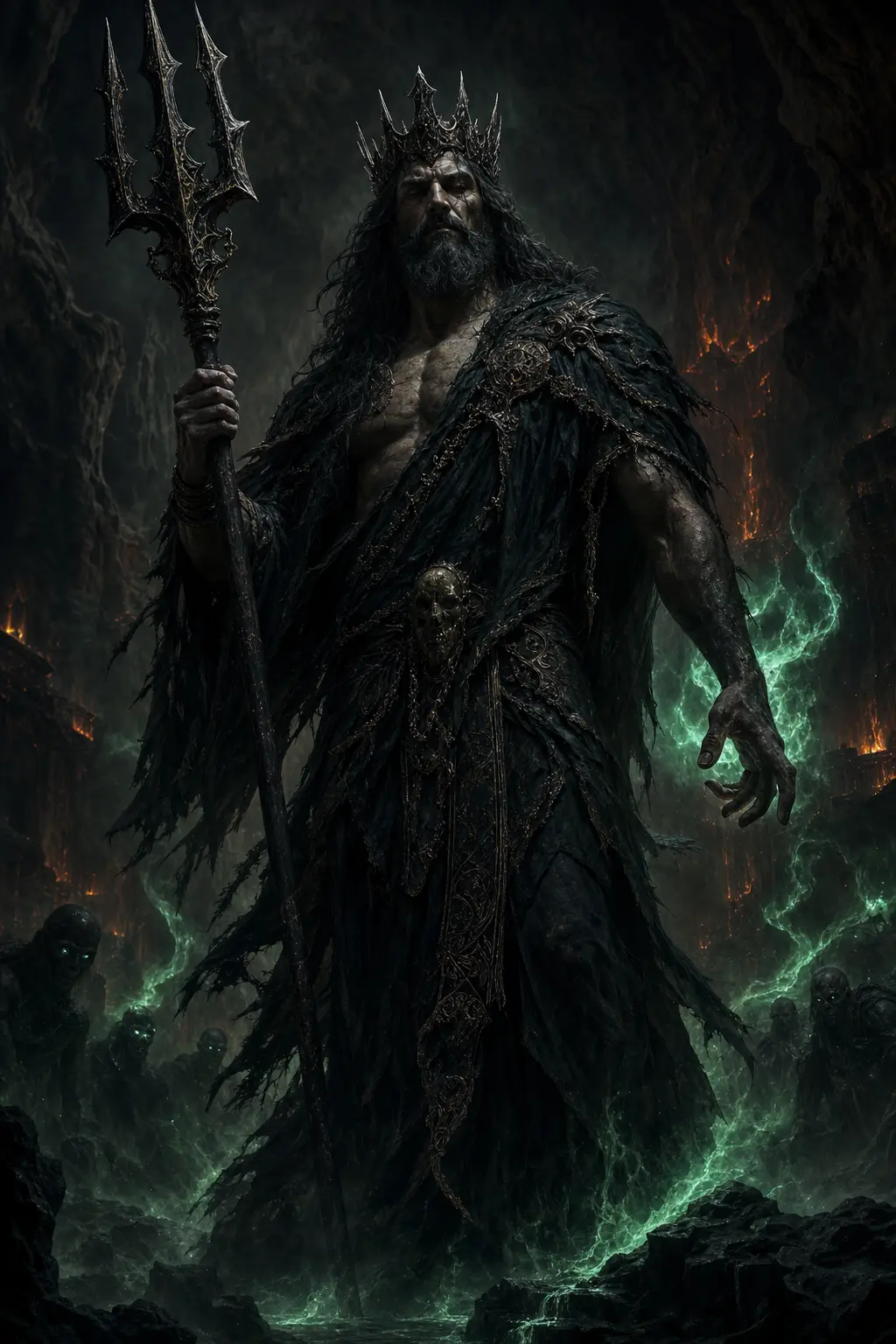
Hades drew the short straw when the three brothers split the cosmos: Zeus took the sky, Poseidon the sea, and he got the basement. He is no devil; he is middle management with a throne, running judges for the dead, Charon the ferryman at the border and Cerberus at the exit. He almost never leaves.
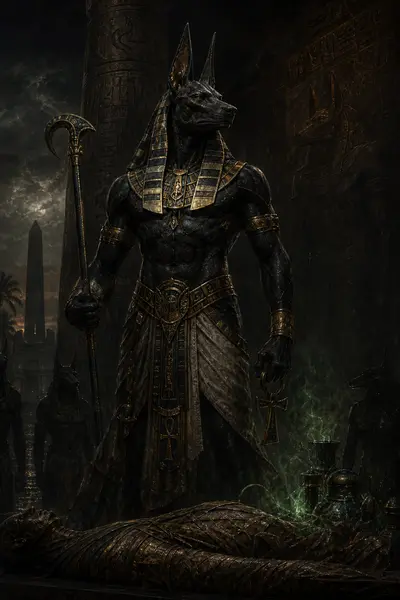
Anubis reports to Osiris, the real king of the Egyptian dead. His department is the weighing of the heart: your heart on one pan, the feather of Maat on the other, and Anubis adjusting the scale himself so nobody cheats. Egypt is the only afterlife on this list you can pass or fail.
Hel got her throne as an insult. Odin looked at Loki's daughter, half beautiful woman and half corpse, and hurled her into Niflheim. She turned the insult into a kingdom: everyone who dies of age or sickness is hers, since warriors get skimmed off to Valhalla or Freya's field. At Ragnarok she collects the debt and sails out with an army of the dead.
Three ideas of death
Greece treats death as an archive: fair, permanent, ungraded. Egypt treats it as a final exam you can actually revise for. The Norse treat it as a sorting by how you died, not how you lived.
Quick questions
Is Hades evil?
No. That is Hollywood needing a Satan and grabbing the nearest god with an underground office. Greek Hades punishes oathbreakers and enforces the rules, nothing more. Even his worst moment, the abduction of Persephone, ends in a negotiated marriage with the seasons attached: full story: Demeter and Persephone.
Who actually rules the Egyptian underworld?
Osiris. Anubis runs the judgement, then hands the verdict up the chain. Think chief examiner, not king. His full day job, jackal head included: our Anubis deep dive.
Can you leave any of these underworlds?
Almost never, and the exceptions are famous precisely because they are exceptions. Orpheus got the one loophole in history and blew it at the door. Sisyphus talked his way out and earned an eternal boulder for it. Persephone commutes: six months up, six months down. Everyone else stays.
MythologyNow, the app to learn mythology, tells all three underworlds in 5-minute narrated episodes, and chapter 1 of Hel and the Realm of the Dead plays in full on this site. Meet Thanatos at the moment it all begins, and listen to the Valkyries decide who never meets Hel at all.
Keep reading


Hear these myths narrated
MythologyNow is out. Over 100 myths in audio, in six languages.