Short answer: Start with Midas, Icarus and Pandora around ages 5 to 7, and work up to Orpheus and the labors of Heracles by 8 or 9. Greek mythology was never written for children, so the selection is the whole job: pick the right myth for the right age and most of the difficulty disappears. If you want the adult overview first, the study guide and the family tree cover the map.
Greek mythology for kids: the 10 myths to start with (and the 4 to save for later)
Hear these myths narrated



Start here
| Myth | Age | Why it works |
|---|---|---|
| King Midas | 5+ | Greed in one image a five year old gets instantly: everything he touches turns to gold, dinner included. |
| Icarus and Daedalus | 6+ | The first story about ignoring good advice, and the wings make it unforgettable. |
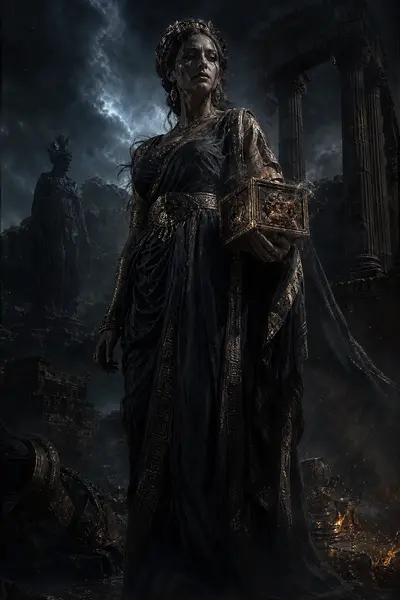
| Pandora's jar | 6+ | Curiosity has consequences, and hope is what stays behind. Kids argue about this one for days. |
| Arachne | 7+ | Pride and craft. She is turned into a spider, an ending some children love and others really do not. |
| Theseus and the Minotaur | 7+ | Courage plus one practical idea: the thread that gets you back out again. |
| The Trojan horse | 7+ | Cleverness beats strength, and the whole thing fits in three minutes. |
| Persephone and the seasons | 6+ | It explains winter. Children's versions soften the abduction into an invitation, which is worth knowing before you read it aloud. |
| Echo and Narcissus | 8+ | Kindness and vanity side by side, with no lecture attached. |
| Orpheus | 9+ | Love and one look back. Usually the first story that genuinely aches. |
| The 12 labors of Heracles | 8+ | Lion, hydra, birds, golden apples. A whole series, ideal for one a night. |
Save for later
Not forbidden, simply better later, when a child can hold the horror at a distance instead of taking it to bed.
| Myth | Why to wait |
|---|---|
| Cronus eating his children | Body horror, and the image outlasts the story by years. |
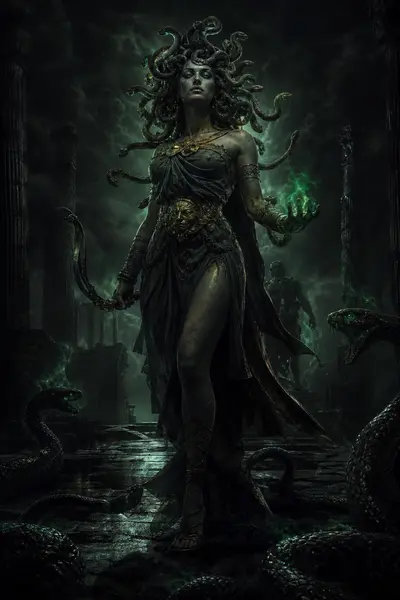
| Medusa's origin | In the older telling it begins with an assault in Athena's temple, and the punishment falls on the victim. |
| Oedipus | The plot is a father killed and a mother married, and no version makes that lighter. |
| Prometheus chained | An eagle, a liver, every single day forever. It is graphic, and the endlessness is what lands badly. |
How to tell a myth to a kid
Start with the wanting, not the genealogy. Not "Midas was a Phrygian king, son of Gordias" but "there was a king who wanted more gold than anyone alive". Names can arrive later, once the child cares.
Let the monster be scary and the ending safe. The fear is the fun part; kids want the Minotaur to be genuinely terrifying. What they need is the last line to close the door: Theseus is out, the thread held, everyone is home.
Let them ask why the gods behave badly. That question is not a problem with the myth, it is the point of the myth. Athena curses a better weaver, Zeus lies, Hera takes revenge on the wrong person. "Because they are powerful and they are not fair" is a complete and honest answer, and children handle it well.
Use audio at bedtime. With eyes closed, the images a child builds beat any illustration, and it takes the screen out of the last half hour of the day.
Quick questions
What age should kids start Greek mythology?
Around 5 or 6, with the right myths. Midas, Icarus and Pandora work at that age because each one is a single clear want with a single clear consequence. The complicated gods, the family tree and the wars can wait until 8 or 9.
Is Greek mythology too violent for children?
The sources are adult and often brutal, so unfiltered, yes. But the selection is your job, not the myth's. Perhaps a fifth of the canon is genuinely rough; the rest is monsters, cleverness and consequences, which is exactly what children want from a story.
What is the best myth to start with?
Midas. It needs no context, no gods to introduce and no map, and the moment where his food turns to metal is understood immediately by every child who has ever wanted one more of something.
When they want more: our ranking of Greek monsters, the 12 Olympians and the mythological names list.
MythologyNow narrates myths as audio dramas, with music and voices. To be straight with you: it is made for curious adults and older kids, and the stories are told faithfully, so some of them include the parts listed above. It is not a children's app. Preview an episode yourself, and five minutes will tell you whether it fits your house.
Keep reading

Hear these myths narrated
MythologyNow is out. Over 100 myths in audio, in six languages.