Short answer: Calypso is the nymph, or minor goddess, who kept Odysseus on the island of Ogygia for seven years and offered to make him immortal. He said no. That refusal is the philosophical spine of the whole Odyssey, and she is the reason the poem is not a war story but a story about wanting to go home.
Calypso: the goddess who offered immortality and was refused
Hear these myths narrated



Seven years, the longest stop of the journey
Most people remember the Cyclops, or Circe, and file Calypso away as a brief episode. The arithmetic says otherwise: of the ten years Odysseus takes to get home from Troy, seven happen on her island. He spends more of that decade with her than with anyone or anywhere else in the poem, and almost nobody realises it.
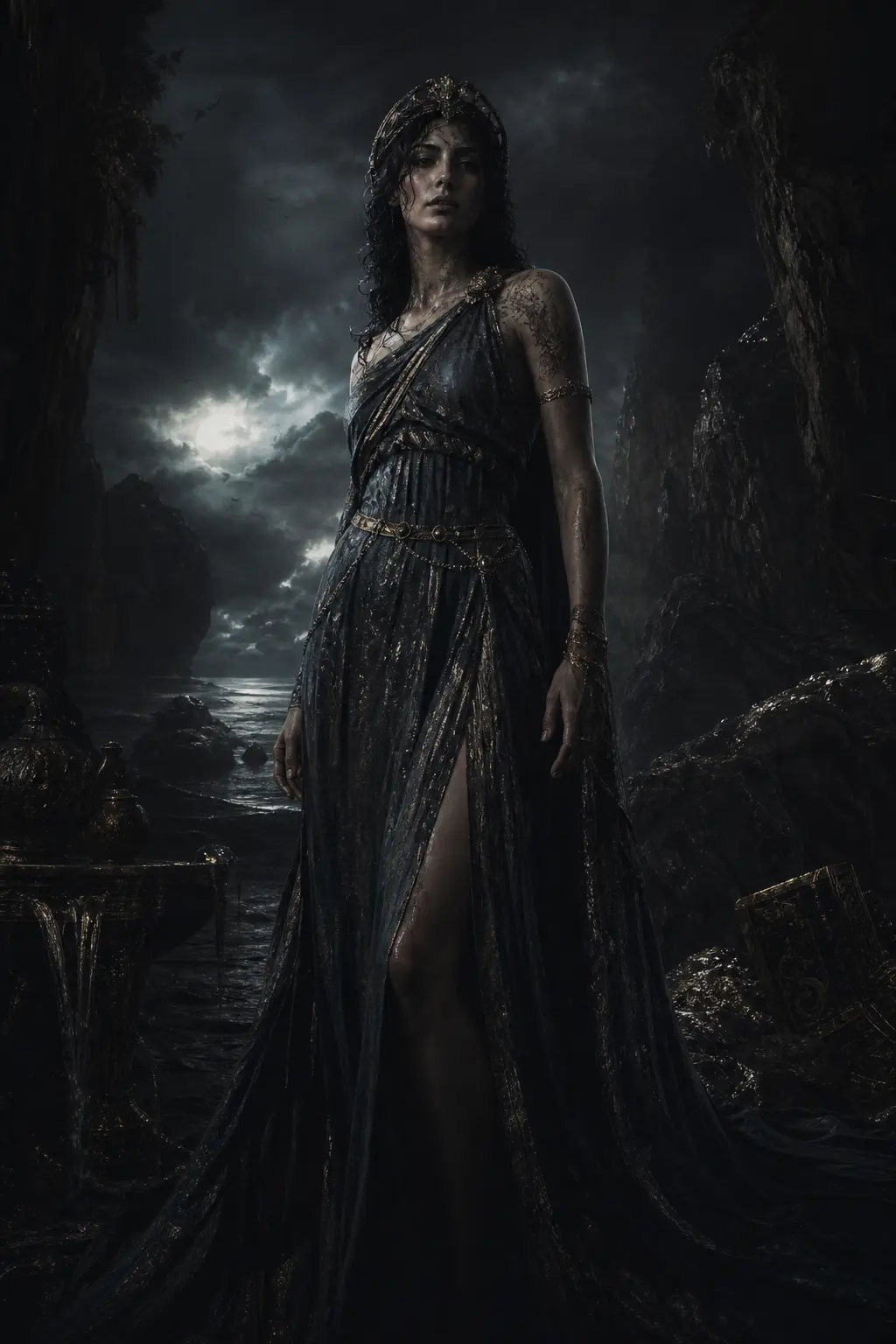
In Homer she is the daughter of Atlas, and she lives alone. Meadows of violets, four clear springs, a cave scented with cedar smoke, a goddess singing at her loom. By every measure a Greek would use, paradise. Which makes Homer's chosen image the cruellest in the poem: Odysseus on the shore each day, weeping, staring at empty water, then going back to her bed at night. The line is exact and devastating. He lay with her, Homer says, unwilling beside the willing. Seven years of that.
Then the offer: not company, not comfort, but deathless and ageless, permanently. He answers politely that he knows Penelope is a mortal woman who cannot compare with a goddess, and that he wants to go home anyway. A man is handed the prize every Greek hero chases, and trades it for an ageing wife on a rocky island. That is the Odyssey's argument about what a life is for.
What the Odyssey actually says
| Question | What the Odyssey says |
|---|---|
| How long? | Seven years, the longest single stop of a ten-year journey |
| What did she offer? | Immortality and eternal youth, forever, on Ogygia |
| Why did he refuse? | Home, Penelope, Ithaca: a mortal life he recognises as his own |
| Did she let him go? | Yes, on Zeus's order, and then she equips him for the crossing |
| What does her name mean? | Roughly "the concealer", from the Greek verb for covering or hiding |
Freeing him takes divine intervention: Athena raises his case in the council of the gods, and Hermes flies to Ogygia with Zeus's order. Calypso's reply is startlingly modern. You gods are jealous, she tells him, you cannot bear a goddess taking a mortal to her bed while you do precisely as you please. It is, three thousand years early, an argument about a double standard.
Then she does what readers keep forgetting: she helps. Tall trees, a bronze axe, cloth for a sail, bread and water and dark wine, a warm wind sent after him. She lets him go with grace, which is harder than keeping him. Days later Poseidon wrecks the raft anyway.
Homer never mentions her again. Later writers filled the silence differently: some give her sons by Odysseus, others leave her wasting away on her own island. The concealer ends up concealed.
Quick questions
Why did Odysseus refuse immortality?
Because immortality on Ogygia means being nobody. No Ithaca, no son, no name spoken by anyone. Greek heroes live for kleos, the story told after you die, and a man who never dies never gets one.
Was Calypso in love with Odysseus, or holding him prisoner?
Homer's text supports both, and the ambiguity looks deliberate. The verb used of her means detaining, keeping someone from leaving. Yet she calls him her husband and refuses to send him off unprepared. That famous phrase, unwilling beside the willing, splits the difference in four words: she wants him, he does not want to be there, both true every night for seven years. Nobody among the women of the Odyssey is harder to judge.
Is Calypso a goddess or a nymph?
Both, and the distinction is thinner than it sounds. Homer calls her a nymph and also "shining among goddesses". Nymph marked rank, not nature: she is immortal and can hand out eternal life. She simply has no temple and no cult, only an island at what Homer calls the navel of the sea.
Her seven years, and the day he says no, have their own 5-minute episode in MythologyNow: it is chapter 7 of the Odyssey, and chapter 1 plays in full on this site. If the Odyssey movie sent you here, this is the passage worth arriving for, and it belongs on any honest list of mythology's great love stories.
Keep reading

Hear these myths narrated
MythologyNow is out. Over 100 myths in audio, in six languages.