Short answer: it depends on what you call "power". Zeus rules other gods; Thor is the physically strongest of the three; and Ra holds up existence itself, if he falls for a single night, the sun doesn't rise. On authority, Zeus wins. On raw strength, Thor. On daily stakes, Ra.
Now let's earn that answer.
The three, head to head
|
Zeus |
Thor |
Ra |
| Pantheon |
Greek |
Norse |
Egyptian |
| Domain |
Sky and authority |
Thunder and protection |
The sun and creation |
| Weapon |
The thunderbolt, forged by the Cyclopes |
Mjölnir, which always returns to his hand |
The solar barque and the Eye of Ra |
| Defining enemy |
The Titans |
The World Serpent |
Apophis, every single night |
| Weakness |
His own appetites |
Jörmungandr, his fate |
The passage of time |
| Dies in his own myths? |
No |
Yes, at Ragnarök |
Ages, but is reborn every day |
The case for Zeus: power as authority
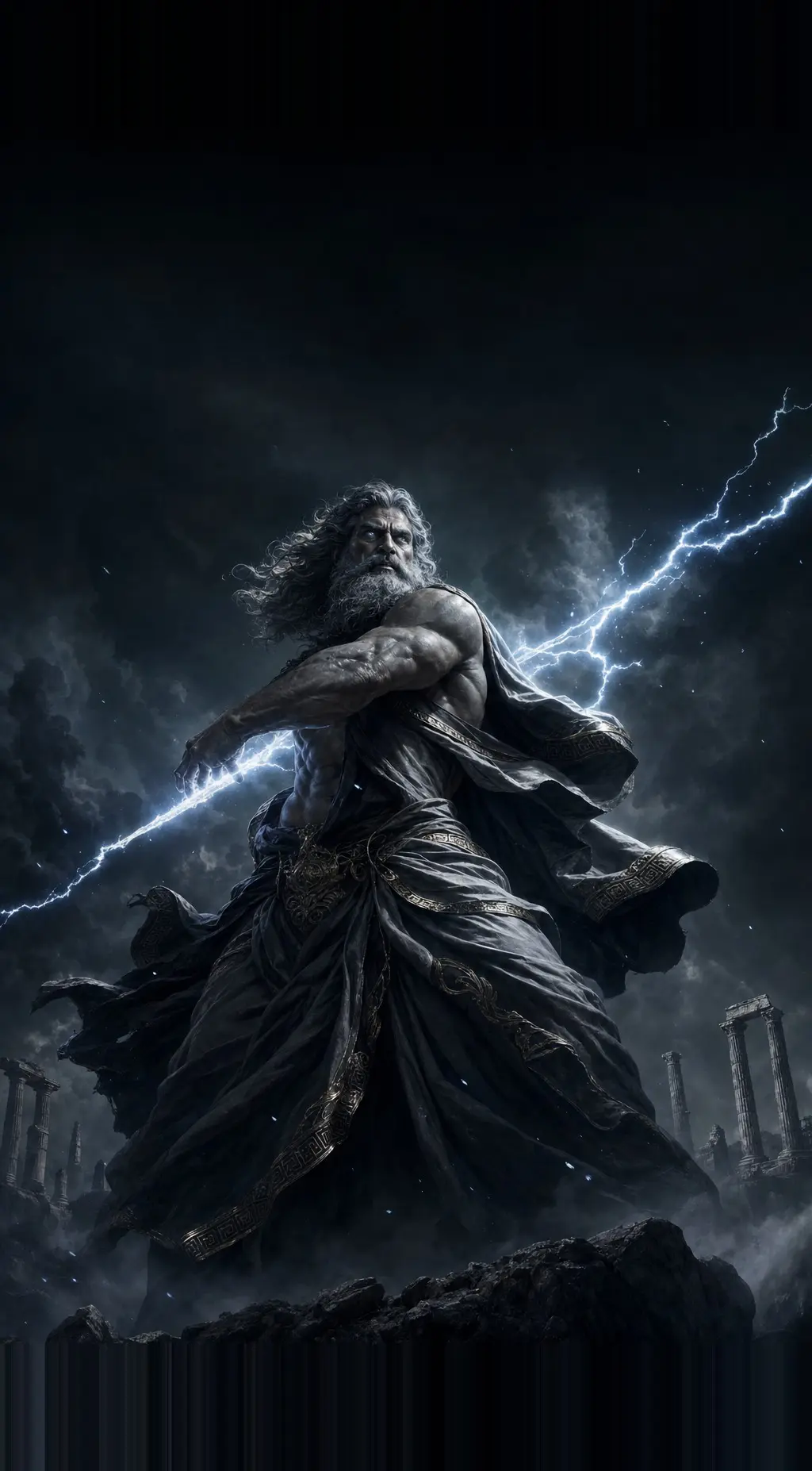
Zeus isn't even the strongest god in his own pantheon: that title probably belongs to his brother Poseidon at sea, or to Athena herself in war. What Zeus has is legitimacy: he led the war against the Titans, divided the cosmos with his brothers and kept the sky, and ever since, no Greek god makes a major decision without glancing his way first.
His thunderbolt, forged by the Cyclopes during the Titanomachy, is less a weapon than a symbol: the monopoly on legitimate violence, with voltage.
The case for Thor: power as strength
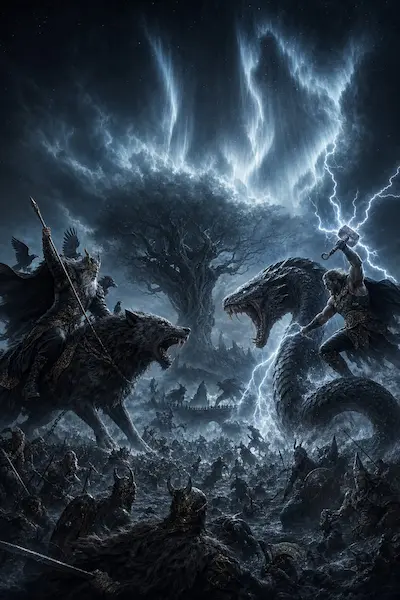
Thor is something else entirely. He rules nothing, that's Odin's job, his father's. Thor is strength in its purest form: the god you call when giants cross the border, the one who hooked the World Serpent and nearly hauled it out of the ocean, the whole world trembling on the line.
The tragic edge that Marvel softens: Thor knows how his story ends. At Ragnarök he will kill Jörmungandr and take nine steps before falling to its venom. He fights anyway. That's the Norse idea of power: not escaping your fate, but rising to meet it.
The case for Ra: power as responsibility
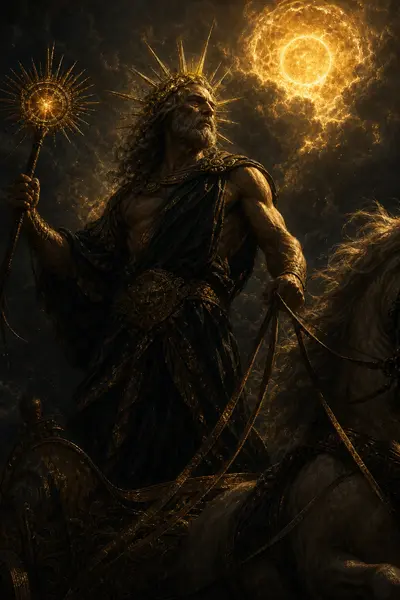
Ra isn't competing in the same category. Zeus rules gods and Thor wins battles, but Ra keeps existence switched on. Every night his barque crosses the Duat, the Egyptian underworld, and every night the serpent Apophis (the chaos that preceded creation) tries to devour it.
This isn't a battle you win once. It's an eternal night shift. The Egyptians put it bluntly: if Apophis wins a single night, the sun doesn't rise and the world ends. Ra's power is the only one of the three exercised every day, or else.
Verdict
- In a straight duel: Thor. He is literally the specialist in hitting enormous things.
- In a game of thrones: Zeus. The other two would end up working for him without realizing it.
- In cosmic importance: Ra, and it's not close. Zeus and Thor protect the world; Ra is the reason it exists.
Quick questions
Did Zeus and Thor ever "coexist"?
Never in the same mythology, but they did in time: the cult of Zeus and the Norse cult of Thor overlapped for centuries, and the Romans identified Thor with Jupiter (their Zeus) precisely because of the thunder.
Who is the oldest?
Ra, by a long way. His cult is documented around 2400 BC, roughly a thousand years before the first clear records of Zeus, and more than three thousand before the written sources on Thor.
Is Thor the "chief" Norse god?
No: the All-Father is Odin. But Thor was the one ordinary people loved most: the protector, not the king.
All three stories (the rise of Zeus, Thor against the World Serpent, and Ra's eternal battle) are told as audio dramas on MythologyNow.