Laufey: the series' most elegant catch
In the games, Faye is Kratos' wife and Atreus' mother. At the end of the first one, Atreus is revealed to be Loki.
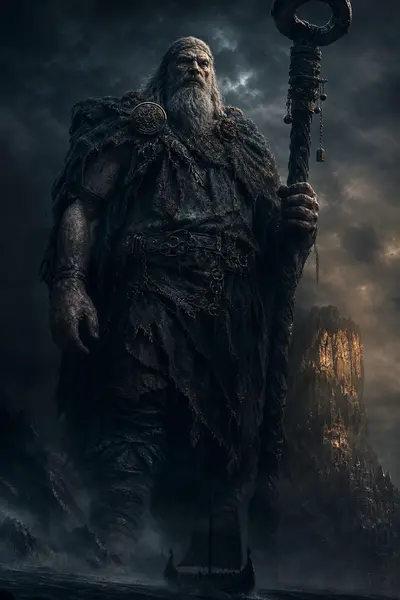
That makes Faye the mother of Loki, and this is where the game lines up with the myth in a way almost nobody notices: in the Eddas, Loki's mother is called Laufey. His father is the giant Fárbauti.
And there is a detail that makes the move even better. In the texts, Loki appears as Loki Laufeyjarson, "son of Laufey". He carries his mother's name in a culture where everyone carried their father's. That is an anomaly in the myth, not in the video game.
Sekhmet: the one who nearly ended humanity
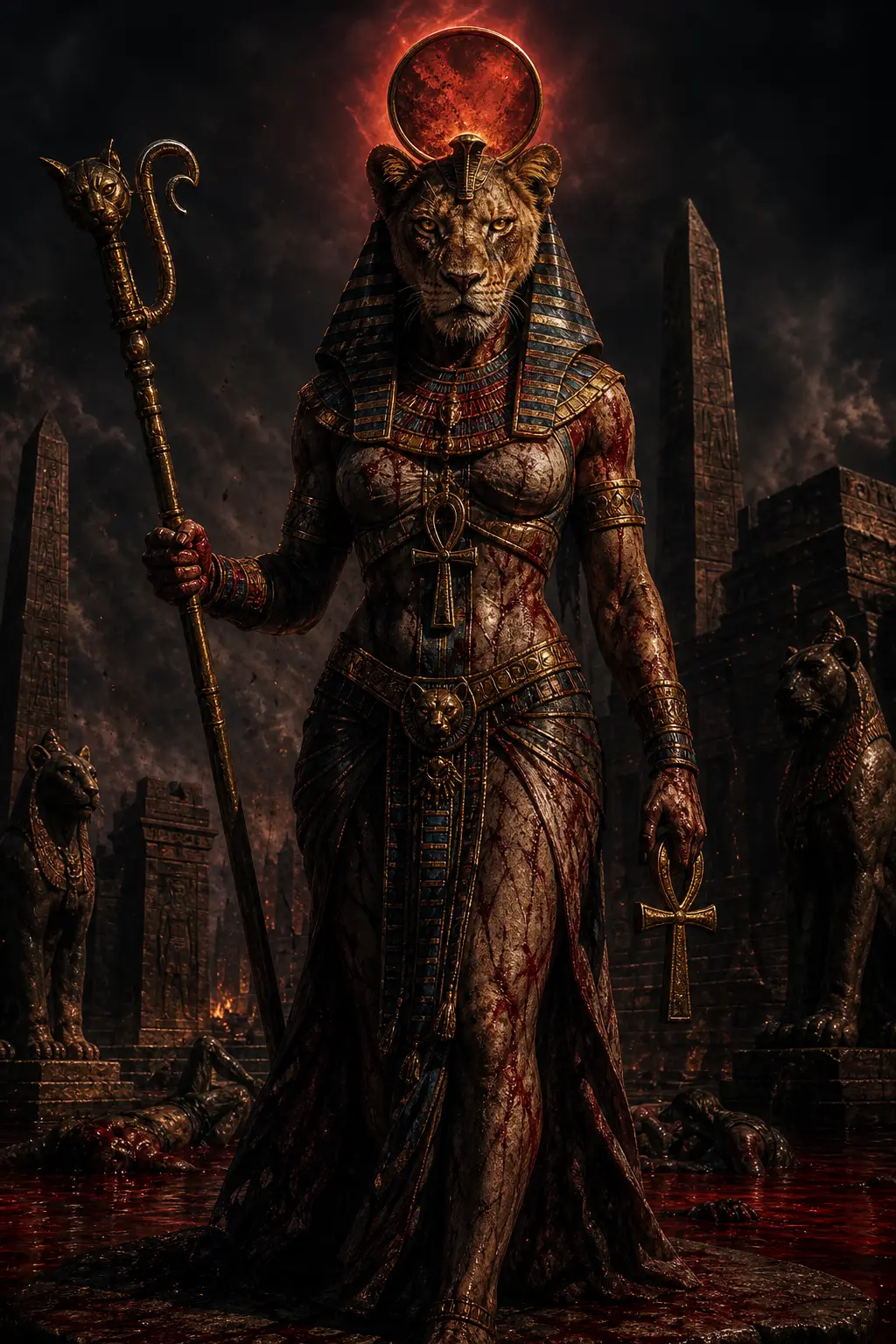
Sekhmet is Ra's daughter, a woman's body with a lioness' head. She is war, plague and also healing: in Egypt, whoever sends the disease is the one who can withdraw it.
Her best known myth is a massacre. Ra sends her to punish humankind and she takes it so seriously that she sets out to exterminate everyone. Nobody can stop her. So Ra dyes seven thousand jars of beer red and pours them over the land. Sekhmet drinks it believing it is blood, gets drunk and falls asleep.
Humanity survives because of a hangover.
Begtse: the god who changed religion
Begtse is the least known of the three and has the best story.
He was a pre-Buddhist Mongolian god of war. His name comes from the Mongolian begder, "coat of mail". He is depicted with red skin, orange hair, three bloodshot eyes, a sword in his right hand and a human heart in his left.
Then Buddhism arrives. The most widespread account has him subdued when the Third Dalai Lama travelled to Mongolia to convert Altan Khan in 1577. More recent scholarship suggests he may have been known in Tibet a century earlier.
Whatever the date, the outcome is the same and it is extraordinary: he was defeated, bound by oath and turned into a dharmapala, a protector of the doctrine. The god of war was put on guard duty for the religion that had beaten him.
It is as close as mythology gets to signing your enemy.
What is real and what is the game
| Element |
Verdict |
| Laufey is Loki's mother |
Real, and in the texts Loki carries her name, not his father's |
| Fárbauti, the giant father |
Real, he appears in the Eddas |
| Sekhmet as a war goddess |
Real, and of plague and healing too |
| The beer trick |
Real, it is her most famous myth |
| Begtse, Mongolian war god |
Real, and later a Buddhist protector as well |
| Everywhen, the afterlife of gods |
The game's. None of the three mythologies has that place |
| The three of them meeting |
The game's. They never shared a story |
Quick questions
Does Laufey exist in Norse mythology?
Yes. She is Loki's mother in the Eddas, married to the giant Fárbauti, and also called Nál. Her trace in the texts is short, but her son's name carries her: Loki is Loki Laufeyjarson, "son of Laufey".
Are Sekhmet and Bastet the same goddess?
No, though both are feline and sometimes overlap. Sekhmet is the lioness: war, plague and healing. Bastet is the cat: home, protection and joy. Egyptian tradition sometimes presents them as two faces of one power, the fury and the calm.
Is Begtse a Mongolian god or a Buddhist one?
Both, in that order. He began as a pre-Buddhist Mongolian god of war, and Tibetan Buddhism took him in as a dharmapala, a protector of the doctrine. His name comes from the Mongolian for "coat of mail".